Isn’t there a better way to word these ridiculous prompts?
I’ll play along today, WordPress.
Yes, I had a tonsillectomy and adenoidectomy at the age of four. Repeated ear infections were causing me to lose my hearing, so the adenoids – along with the tonsils as a bonus – had to go.
I woke up during the surgery, and a nice nurse told me to go back to sleep. Many years later, I would end up working in that same hospital. But I could never find my tonsils or my adenoids. They must’ve hidden them well. 
My hearing came back, and all was functioning well until recently when the ear infections returned, and now I am almost completely deaf in my left ear. No one really knows why, except repeated infections are known to do that. Does that answer your question, WordPress? Is this prompt data mining for the selling of organs on the black market?
This is me at the height of my sickness, and just prior to my surgery. At least that’s what my mom told me. The puppy in my lap is Flower. She died of distemper shortly after this. My mom talked about how much she loved this dog for the rest of her life.
Are there things you try to practice daily to live a more sustainable lifestyle?
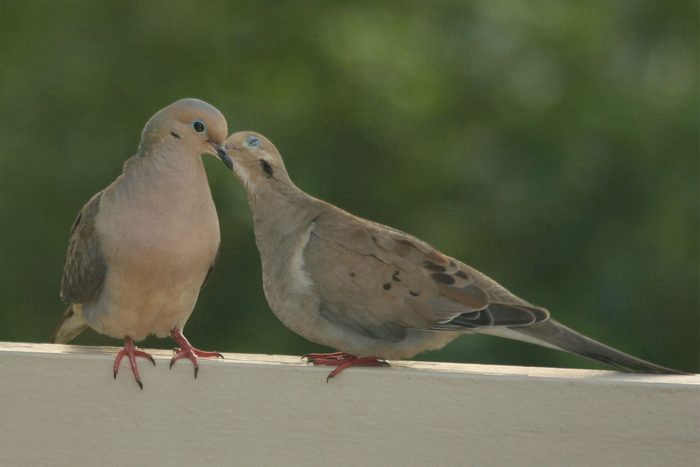
I didn’t want to answer this prompt by saying, “I recycle, reuse and repurpose,” not because I don’t do those things (I do), but because I felt like it would be a common answer. After a bit of deliberation, I found my prompt answer in an unusual spot. It seems the mourning doves felt very comfortable and a bit frisky in the front flower bed this morning.
That got me thinking. I have noticed there are teenaged squirrels in the backyard and teenaged starlings at the birdbath.
Thus, my contribution to sustainability is providing a natural reproductive habitat for birds, rodents, insects, and possibly Toady McToaderson – if he can find his mate one of these nights. Poor Toady.
If you were forced to wear one outfit over and over again, what would it be?
‘Cause the players gonna play, play, play, play, play And the haters gonna hate, hate, hate, hate, hate Baby, I’m just gonna shake, shake, shake, shake, shake I shake it off, I shake it off (hoo-hoo-hoo)
– lyrics from Shake It Off, Taylor Swift
Haters gonna hate, but if I can’t see them, it doesn’t matter
I don’t know which is worse: the common name or the Latin name.
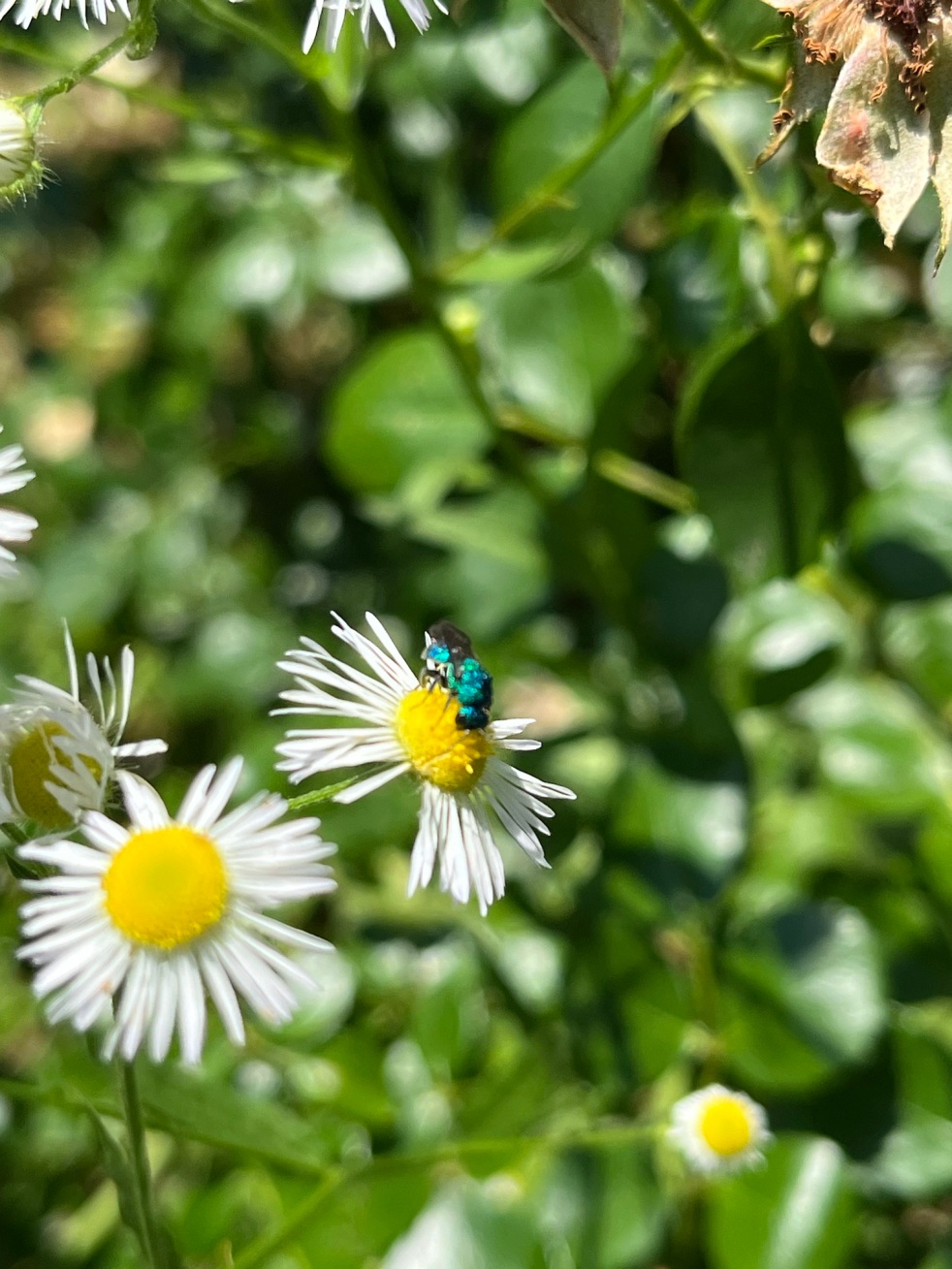
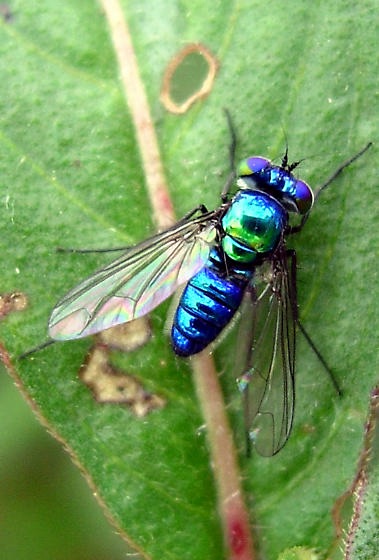
When I noticed this stunning bug on a wildflower that is growing up through my rosebush, its legs weren’t the first thing I thought about, nor clamored to see. My first thought wasn’t “I need to be able to judge its leg length compared to other flies’ leg lengths!” I had never seen one of these before, and I am not sure that I ever will again. It is not native to my area.
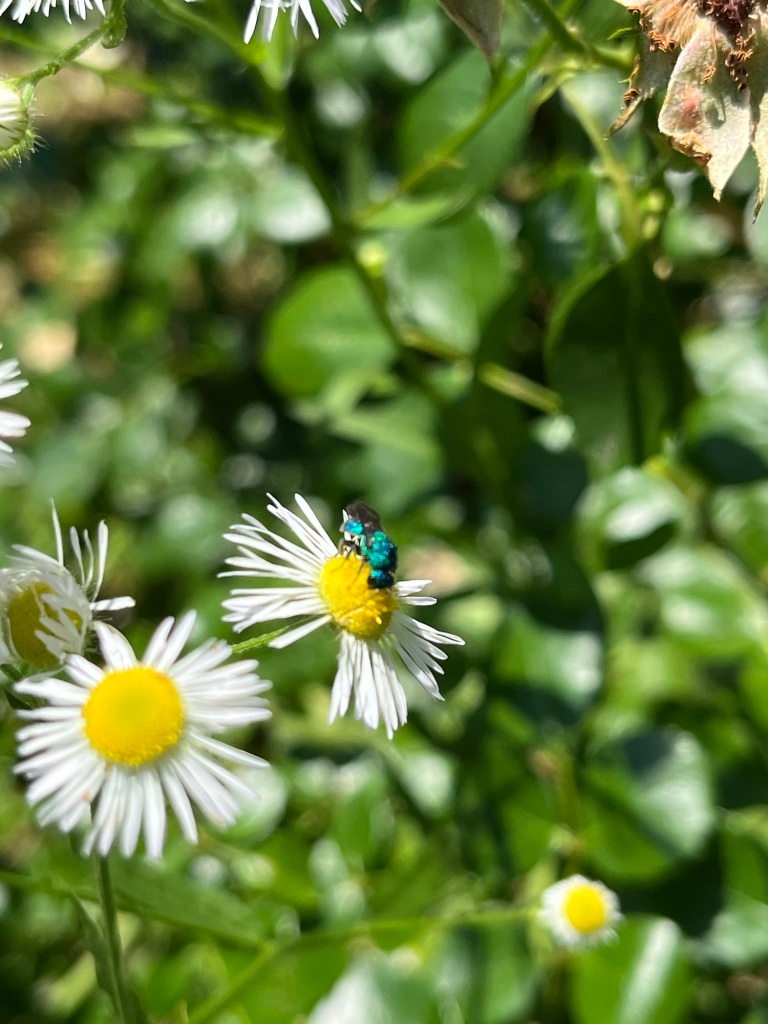
I tried not to scare it away as I reached for my phone. You know how I like to chase things that are cute – or in this case stunningly beautiful – and you know how they run away from me (bunnies, bumblebees, butterflies, I’m looking at you…). I inched closer to this marvelous being, and was able to capture a few shots. Unfortunately, my phone was completely captivated and was unable to focus on the creature very well, and I ended up with only one decent photo.
After the Beauty Queen of the Backyard flew off, I went inside and did some research. Google told me this electrifyingly blue-green insect was called a Long-Legged Fly. First of all, this bug did not have Daddy-Long Leg legs – that would have been pretty obvious, and honestly? Ridiculous. My second complaint was: why are we focusing on legs when we have an entire blue-green iridescent body that is deserving of a better name than one given to a hillbilly at a dive bar in a Holler?
And then there is the Latin, official name: Condylostylus mundus. Really? The only thing I see here is stylus, and maybe that is vaguely appropriate, but we need to alter the word to stylish.
A far better photo, likely by a professional who doesn’t chase down shiny creatures in the backyard
In summary, I have renamed this fly, which, by the way, eats aphids and other pests, and is completely not like the regular fly that we associate with trash and maggots. (Sidebar: I absolutely abhor maggots, and will run for the hills, alternatively screeching and gagging if I see even one of them.) Flies are disgusting. I know they’re necessary, but I also know every time they land they throw up, and I can be down with the delectable bee vomit, but I am not down with fly vomit under any circumstances.
But I digress. Back to the stylish fly. I’ve decided to rename it, and I think that the governing bodies of naming insects should listen to me.







 “It's Amy,” I said.